


EU grants for improving human interaction with AI, soft wet adhesion physics and the capacity of legal systems

Three Aalto University researchers have received ERC Starting Grants worth 1.5 million euros each from the European Research Council. The funded projects will run for five years.
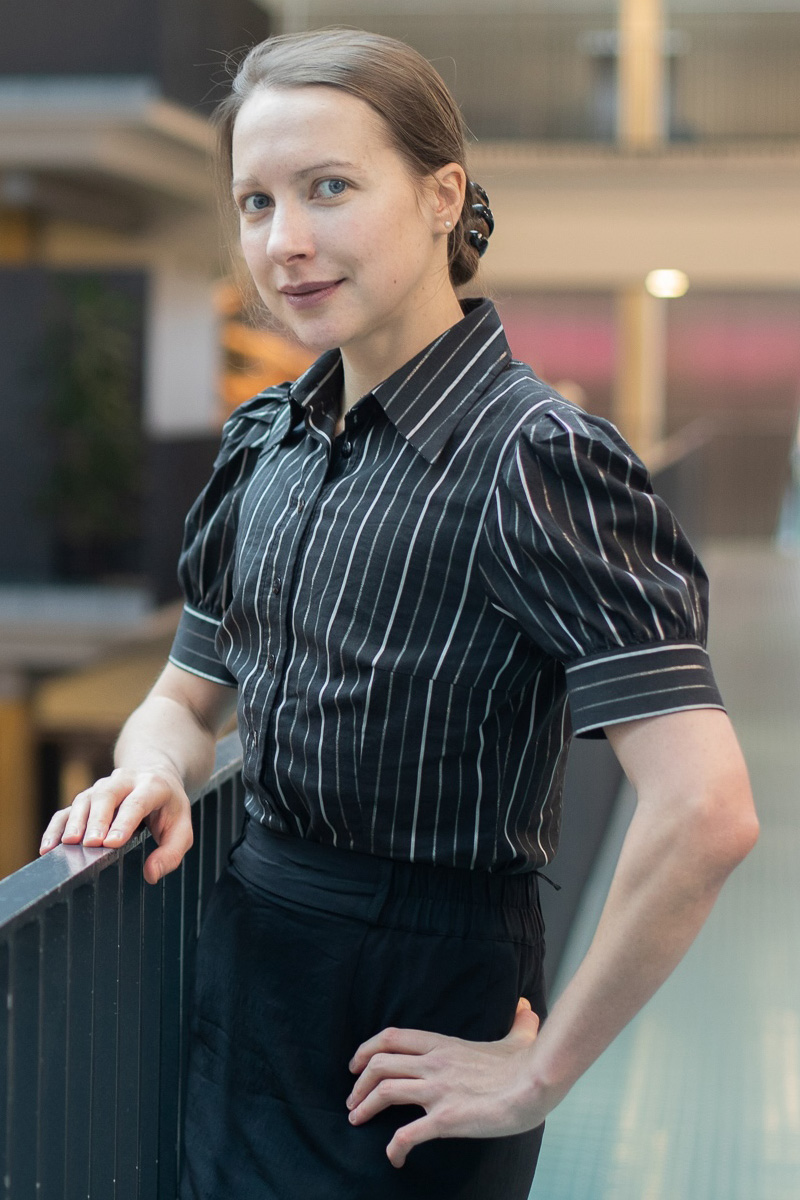
The ERC project , led by Assistant Professor Robin Welsch, examines how artificial intelligence (AI) can be integrated with human intelligence, thereby enhancing our ability to reason, make decisions, and solve problems. Unlike today’s AI tools, which often leave us overconfident or overly reliant, AmplifAI develops new ways to measure human–AI performance, strengthen our self-awareness when working with AI and design interfaces that truly amplify our minds.
‘Current AI models are designed to outperform each other in benchmarks—not to support humans. That’s why they are often released directly to the public without considering how people will actually use them,’ Welsch says.
A core goal of the project is to establish new metrics that account for human interaction with AI and to design systems around these metrics. “At the moment, it’s like giving people a racecar and expecting them to drive on regular streets without any guidance,” he says.
When using AI, people are often unaware of their own AI-augmented cognitive potential. This leads to “mindless prompting” instead of thoughtful engagement with the system. To address the issue, the project seeks to build a theory of how humans think about their own thinking when working with AI.
‘We need to understand not only how AI can help people get things done faster but how it can truly make them smarter.’
Soft wet adhesion physics for breakthroughs in wearable devices, implants and tissue engineering
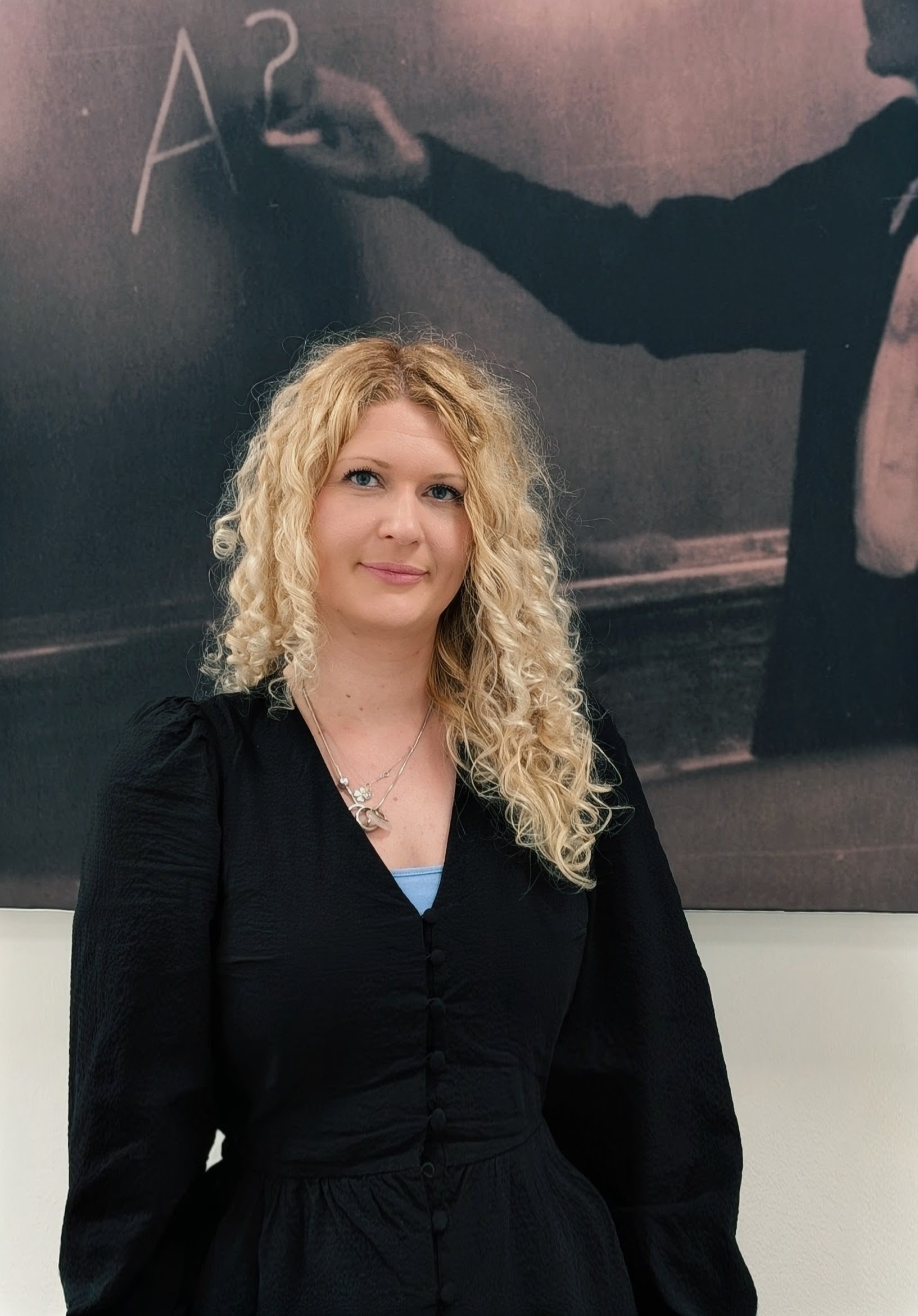
Academy Research Fellow Maja Vuckovac from the Department of Applied Physics studies how electric charges affect adhesion between soft materials in wet environments. In the STICKY project, she is developing a new electron adhesion microscope to uncover these mechanisms at the mesoscale, where molecular interactions determine material behaviour.
‘Soft materials are everywhere — from gels, polymers, and biological tissues to the natural adhesives of mussels and insects,” Vuckovac explains. “Yet we still don’t know how electric charges affect stickiness in liquid environments. By unravelling these mechanisms, we can design entirely new interfaces with human tissue—from wearable devices to biomedical patches—and inspire innovations across medicine, robotics and advanced materials.’
The findings could lead to tangible improvements in biomedical engineering, for example, with better implants, artificial tissues or drug delivery systems, and enable new technologies in soft robotics and underwater adhesives.
New computational theory can help legal systems respond to societal problems
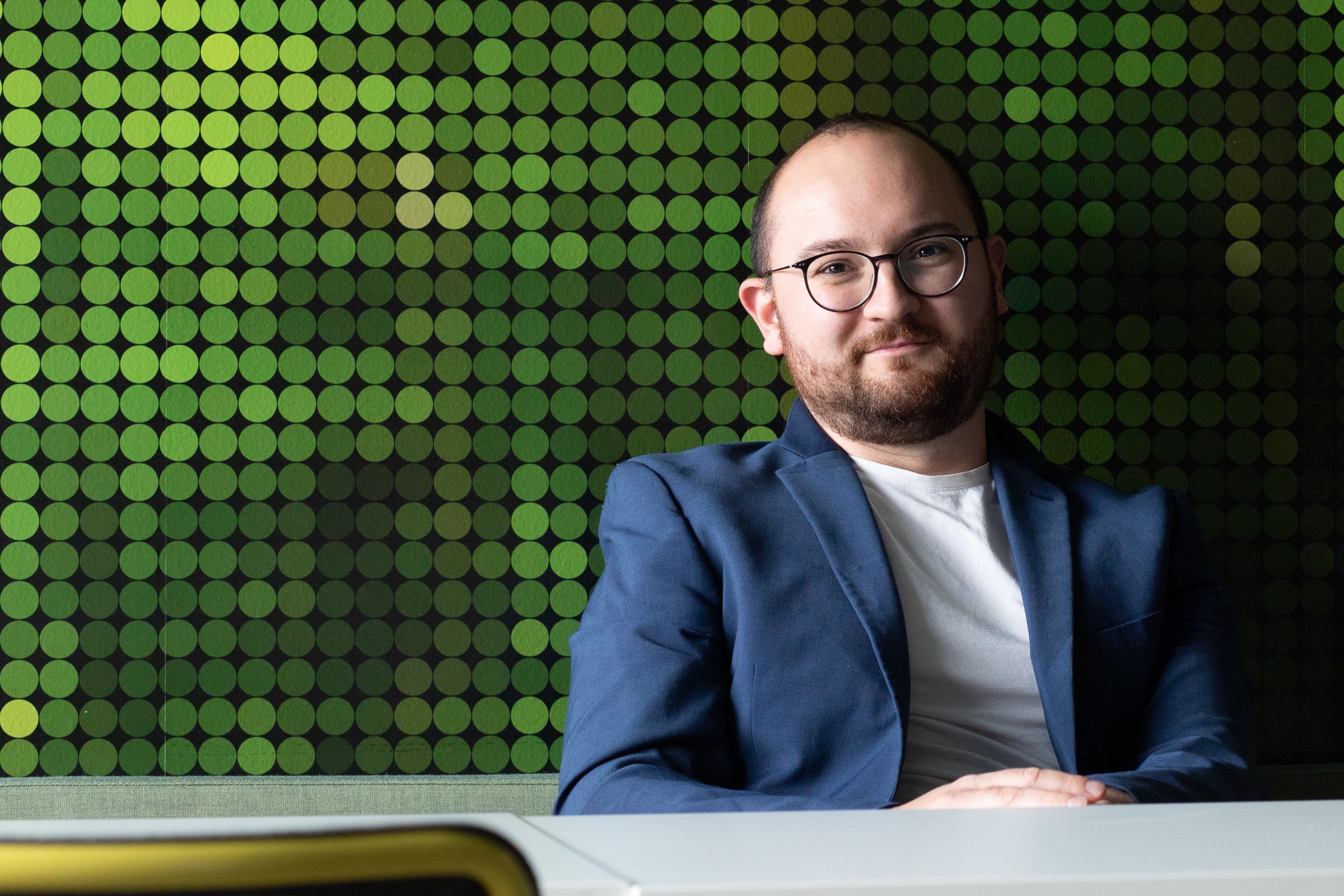
Combatting climate change, safeguarding democracy and regulating artificial intelligence are not only fundamental challenges for societies, but also pressing concerns for legal systems worldwide. In their ERC-funded project, Assistant Professor of computer science Corinna Coupette aims to improve the capacity of legal systems to respond effectively to today’s problems.
In the CompLex project, Coupette’s team will develop a computational theory of legal systems. To this end, the researchers combine perspectives from legal theory with concepts and method-development techniques from computer science and network science.
‘We need to make our legal systems more robust, resilient and adaptive. To achieve this, we need to be able to model, measure and monitor them just like other complex systems. CompLex will provide the theoretical framework and the methodological toolkit to make this happen,’ Coupette explains.
The European Research Council (ERC) funding is awarded to leading researchers for pioneering work at the frontiers of science. ERC Starting Grants are designed to support talented early-career scientists (2–7 years since completion of PhD).
More information:
Read more news

New DPSP tool for doctoral studies published
A new digital DPSP tool has replaced the old DPSP tasks on students’ MyStudies portal and the approval method for supervising professors on Student Success Hub.
Pre-examination and graduation schedules over the summer 2026
Information for doctoral students on preliminary examination of doctoral thesis, public defence and graduation over the summer 2026
A unique joint effort – Aalto University receives EUR 9 million in donations to accelerate the energy transition
Donations from ABB, Fortum, St1 and the Walter Ahlström Foundation will be used to establish new professorships. At the same time, the donations support the establishment of Aalto University House of Energy Transition.