


Finnish Doctoral Program Network in Artificial Intelligence.
AI-powered personalized medicine is on the horizon
People have to be in the loop when machine learning is adapted for medical use.

X-rays. Drug prescriptions. Blood biomarkers. Imaging data. Diagnosis codes.
All this and more can make up just one person’s medical history. Plenty of data, yet very few ways to harness it—until the widespread adoption of artificial intelligence (AI). “We have data that spans decades. It’s a complex and detailed portrait of individuals that we can use to predict complex diseases or tailor treatments for patients,” says Sophie Wharrie, a doctoral researcher at Aalto University and the . What Wharrie describes is known as personalized medicine—making healthcare more individualized and effectively targeted to a person based on their own situation. There are various reasons why personalized medicine isn’t yet widely available, and Wharrie’s research focuses on what is missing from the AI side to bring personalized medicine a little closer to reality.
One of the key challenges is that patients with the same diagnosis can be quite different from each other, even within the same population or group. “We have to account for variability in the same disease by modeling individual differences between patients. This can help get more accurate predictions for complex diseases, like Alzheimer’s, diabetes or heart disease,” explains Wharrie. With colleagues, she has recently received from the Research Council of Finland to conduct the kind of translational research needed to make machine learning practical for personalized medicine.
Wharrie outlines three things that the Artificial Intelligence for Personalized Medicine for Real project will be tackling. “First we need meta-learning techniques, models that learn how to learn from a big pool of patient data while also borrowing information from related patients,” says Wharrie. Then, there is the task of making a machine learning model usable and functional in a clinical setting. “This distribution shift problem is common in healthcare, where a model was trained on data from one hospital but fails in a new environment or with different patient data. We need new machine learning methods to address deployment challenges like this.” Finally, the expert knowledge of doctors and medical researchers has to be incorporated. “Keeping the human in the loop, including how doctors and users interact with AI, is very important,” Wharrie adds.
The two-year Proof of Concept project isn’t about commercializing any AI tools, but identifying weaknesses and challenges and finding translational impact in the medical field. “We have the machine learning methods and are ready to think about actual use cases, patient populations and diseases,” says Wharrie. “Our goals are not just to accurately predict a health outcome to validate our methods, but think about usability and meeting the needs of end users, by having a back-and-forth with clinical researchers” in both Finland and the UK.
“Personally, I’m excited to go from personalized health models to finally apply them in ways that are medically important,” Wharrie continues. Before starting a PhD, Wharrie co-founded a startup that built machine learning to predict the risk of pregnancy complications. “This PhD has helped me fill those gaps in machine learning, and the Proof of Concept represents the next stage for me to start translating this work into clinical settings. It needs lots of validation and collaboration to apply these methods in practice, but I started this journey to realize actual impacts in healthcare.”
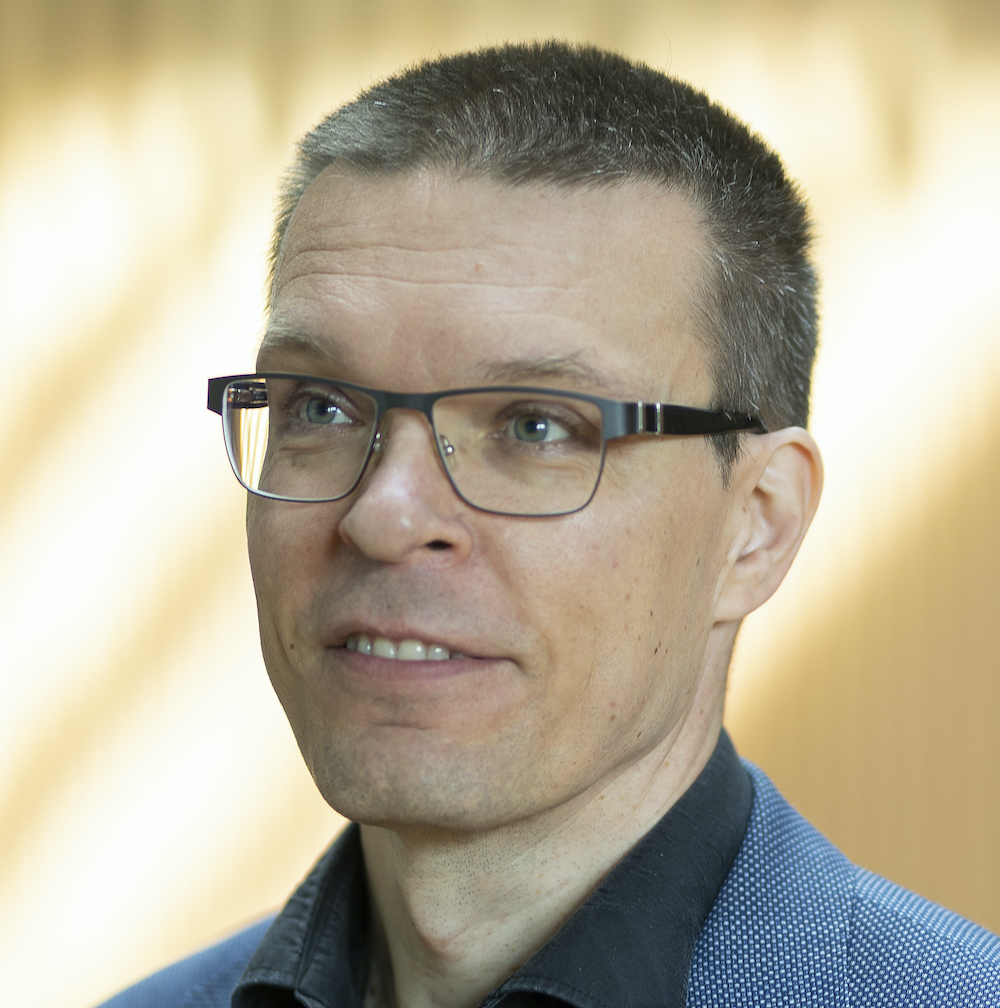
Sophie Wharrie


The Finnish Center for Artificial Intelligence FCAI is a research hub initiated by Aalto University, the University of Helsinki, and the Technical Research Centre of Finland VTT. The goal of FCAI is to develop new types of artificial intelligence that can work with humans in complex environments, and help modernize Finnish industry. FCAI is one of the national flagships of the Academy of Finland.

Doctoral education pilot
We have hired 178 pilot doctoral researchers to get their doctorate from Aalto
Read more news

New DPSP tool for doctoral studies published
A new digital DPSP tool has replaced the old DPSP tasks on students’ MyStudies portal and the approval method for supervising professors on Student Success Hub.
Pre-examination and graduation schedules over the summer 2026
Information for doctoral students on preliminary examination of doctoral thesis, public defence and graduation over the summer 2026
A unique joint effort – Aalto University receives EUR 9 million in donations to accelerate the energy transition
Donations from ABB, Fortum, St1 and the Walter Ahlström Foundation will be used to establish new professorships. At the same time, the donations support the establishment of Aalto University House of Energy Transition.