


Breaking through barriers for a revolution in brain scans

Brain disorders cause a great deal of suffering and a major economic burden to society. The annual cost in Europe alone has been estimated at EUR 800 billion. Now, a European team aims to put Europe at the forefront of a revolution in the scanning and measurement of the human nervous system, to improve the accuracy of current techniques that characterise electrical activity in the brain.
The BREAKBEN (Breaking the Nonuniqueness Barrier in Electromagnetic Neuroimaging) project has designed and built highly sensitive magnetometers 鈥� devices used to detect and measure extremely subtle magnetic fields. The innovative array has been designed to pick up and combine high quality signals for two principal scanning techniques for the human brain: MEG (magnetoencephalography) and ULF MRI (ultra-low-field magnetic resonance imaging).
MEG measures ultra-ultra-weak magnetic fields generated by the brain, a non-invasive method used to inform clinicians about neuronal function. MRI maps the tissue-dependent behaviour of spinning nuclei in water molecules, giving structural images of the brain.
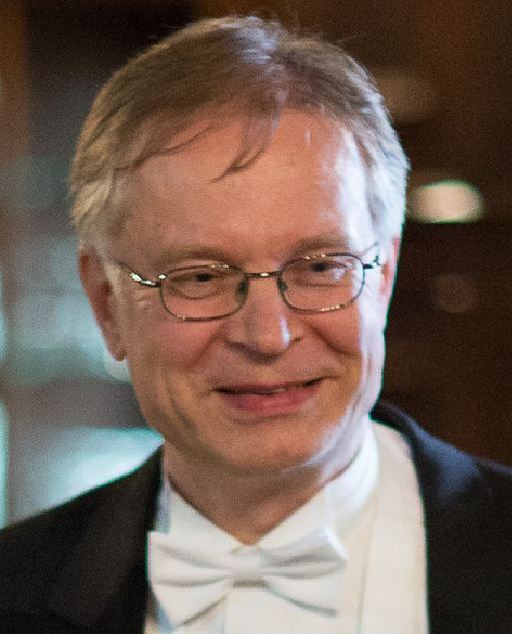
ULF MRI was first demonstrated in 2004 by the team of Professor John Clarke at Berkeley University, using just one sensor 鈥� known as SQUID. BREAKBEN took the idea to the next step. 鈥淲e have developed the first large SQUID sensor arrays that measure both MEG and ULF MRI signals with the same sensors,鈥� explains project coordinator Professor Risto Ilmoniemi, Head of Neuroscience and Biomedical Engineering at Aalto University School of Science.
The German physician Hermann von Helmholtz showed in the 1850s that it is impossible to uniquely determine the electric current distribution (in this case, neuronal currents) inside a conductor (in this case, the head) 鈥� even if both the electric and magnetic fields outside the conductor are perfectly known. This translated into a major future problem for scientists using MEG to measure neuronal currents in the brain, a limitation known as the non-uniqueness barrier.
鈥淲e can never be sure on the basis of MEG alone which parts of the brain are active in a subject or patient,鈥� explains Ilmoniemi. BREAKBEN鈥檚 innovation is to combine these two scanning techniques to help avoid this problem, thus breaking through the barrier.
Simultaneous ULF MRI provides accurate knowledge of the location of the head and the details of the cortical shape. This allows a priori information 鈥� such as that the source current is only in the brain cortex 鈥� to be added reliably into the data analysis. This makes the scanning far more reliable.
Future applications
BREAKBEN鈥檚 breakthrough opens completely different workflows for brain imaging. 鈥淲e believe that we are at the edge of a qualitative technology jump with ULF MRI, its applications and combinations,鈥� says Ilmoniemi. 鈥淭his will revolutionise the way we do magnetism-based measurements of the nervous system.鈥� The technique could help with the mapping of epileptic brain activity, and ULF MRI may help perhaps even in cancer diagnostics. The MEG-MRI device will also open up brain imaging for new patient groups, such as those with metal implants. Improved workflow and more accurate diagnostics will likely shorten hospital stays and optimise treatment 鈥� thus saving on costs, too.
The BREAKBEN team at Aalto University has received Innovation Launchpad funding from the EU to work towards commercialisation of the technique. 鈥淲e are applying for further funding from Business Finland to prepare the prototype and to demonstrate its benefits in patient studies,鈥� concludes Ilmoniemi.
More information:
CORDIS,
漏 European Union
尝颈蝉盲迟颈别迟辞箩补
Read more news

Finland ranks among Europe鈥檚 top investing nations, study finds
Nearly half of Finnish households now invest in stocks or mutual funds, according to a new study from Aalto University.
The film Fjord wins the Palme d'Or at Cannes 鈥� featuring a number of Finnish creators
The film was co-produced by Jussi Rantam盲ki of the film company Aamu, and it also features a Finnish costume and sound designer.
N盲yt枚s/N盲yttely26 transforms Helsinki鈥檚 Lasipalatsi Quarter into a hub for fashion and textile expertise
The event showcases Aalto鈥檚 comprehensive expertise in textiles, clothing, and fashion, as students graduating from both the Bachelor's Major in Fashion as well as the Master's Major in Fashion and Textile Design will present their thesis work.